
HPLC Testing
- Home
- HPLC Testing
Why HPLC Testing is Important for Peptide Purity
HPLC testing confirms a peptide’s chemical identity and purity level with high precision, ensuring the compound is consistent, reliable, and meets the standards required for biotechnology, pharmaceutical, and laboratory research. It detects impurities, validates compound integrity, and provides accurate purity percentages—making it one of the most trusted methods for research-grade peptide analysis and quality assurance.
What is HPLC Testing?
HPLC (High-Performance Liquid Chromatography) is a laboratory analysis method used to separate, identify, and measure compounds in a sample. For peptides, it determines purity percentage and detects impurities, helping researchers verify compound quality and consistency. It’s one of the most trusted testing techniques in biotech and pharmaceutical research.
Our Promise to You
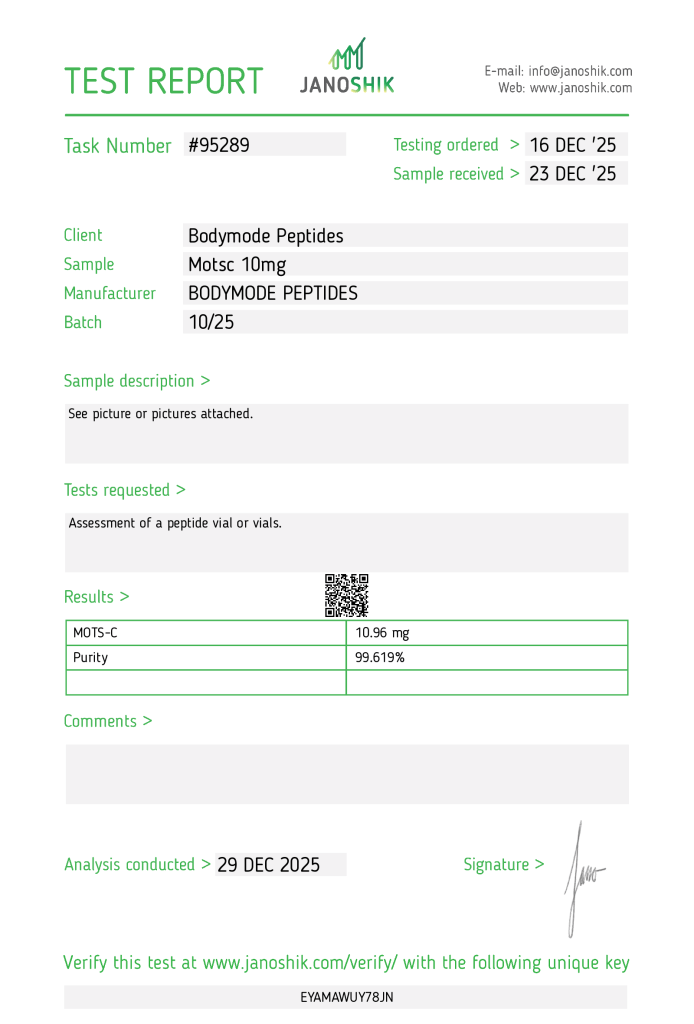
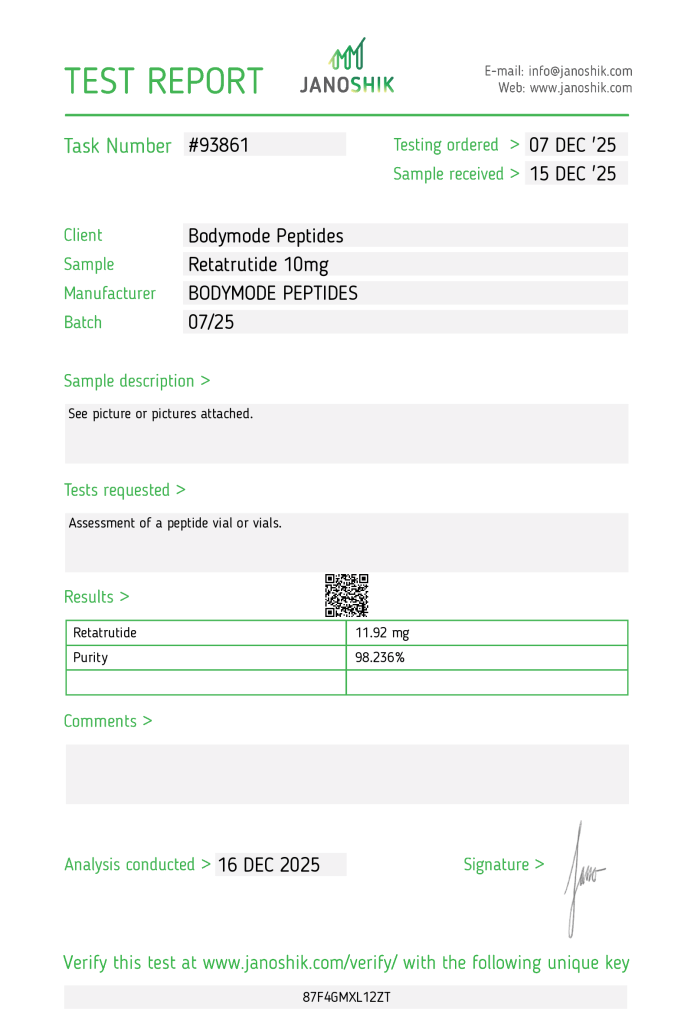
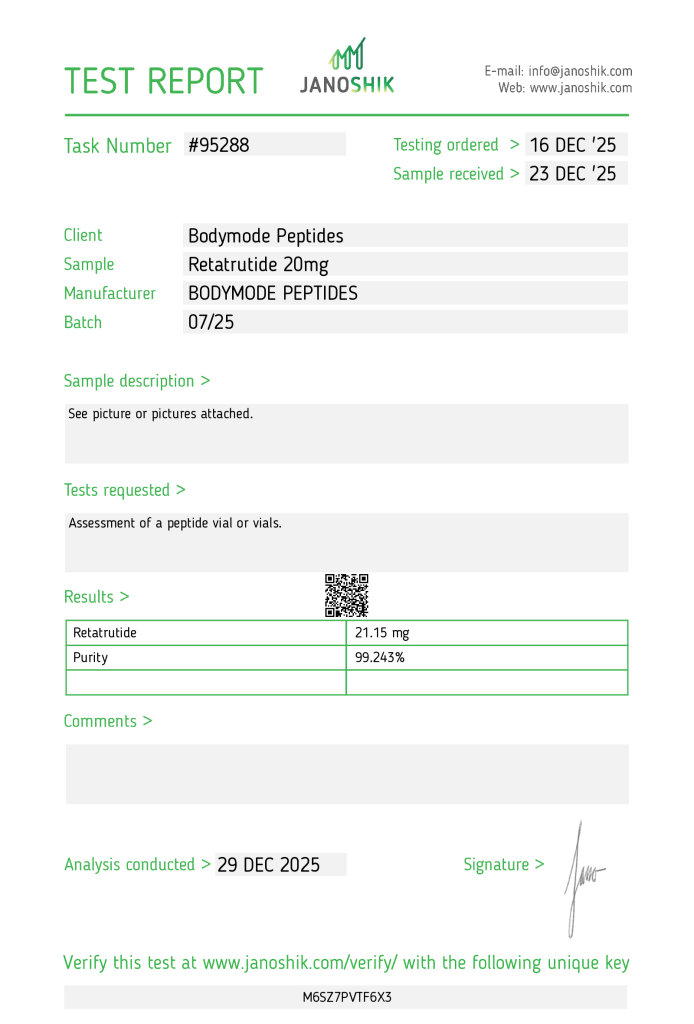
At Bodymode Peptides, every batch we stock is backed by a reviewed Certificate of Analysis (COA) to verify quality and authenticity. We go a step further by performing our own internal COA checks, ensuring consistent purity, reliable batches, and strict quality control, so you can trust the standards behind every product we supply.
All products sold are supplied strictly for laboratory research purposes only and are not for human consumption.
When peptides are used to make medicines they need to be very pure usually over 98% when tested in a lab using a method called HPLC.
For medicines being tested in later clinical trials or sold commercially, the purity and safety rules are strict. It’s not just about the percentage — the type and amount of any impurities must also be carefully checked.
Government agencies like the FDA (USA) and EMA (Europe) decide the final purity and safety standards. Their decision depends on things like the testing phase, what impurities are found, and whether those impurities could affect safety.
Peptide purity at different stages:
- Early safety and toxicology testing: often 90–95% pure is acceptable.
- Early clinical trials (Phase I and early Phase II): usually need 95% purity or higher to make sure the material is safe enough for first human tests.
- Later clinical trials (Phase II, Phase III) and peptides used in approved medicines: normally must be over 98% pure and made in certified facilities that follow cGMP, which ensures consistent and safe production.
Research-Grade Peptides (Not For Humans):
For early research in labs — like testing new ideas, making antibodies, or studying cells — purity can be lower, usually 70–90%, because it’s not being used in people, so the focus is on research results, not patient safety.
All products sold by Bodymode Peptides are supplied strictly for laboratory research purposes only and are not for human consumption.
Certificates
Premium Peptides for Scientific Research
High-purity, research-grade peptides for dependable scientific research.